


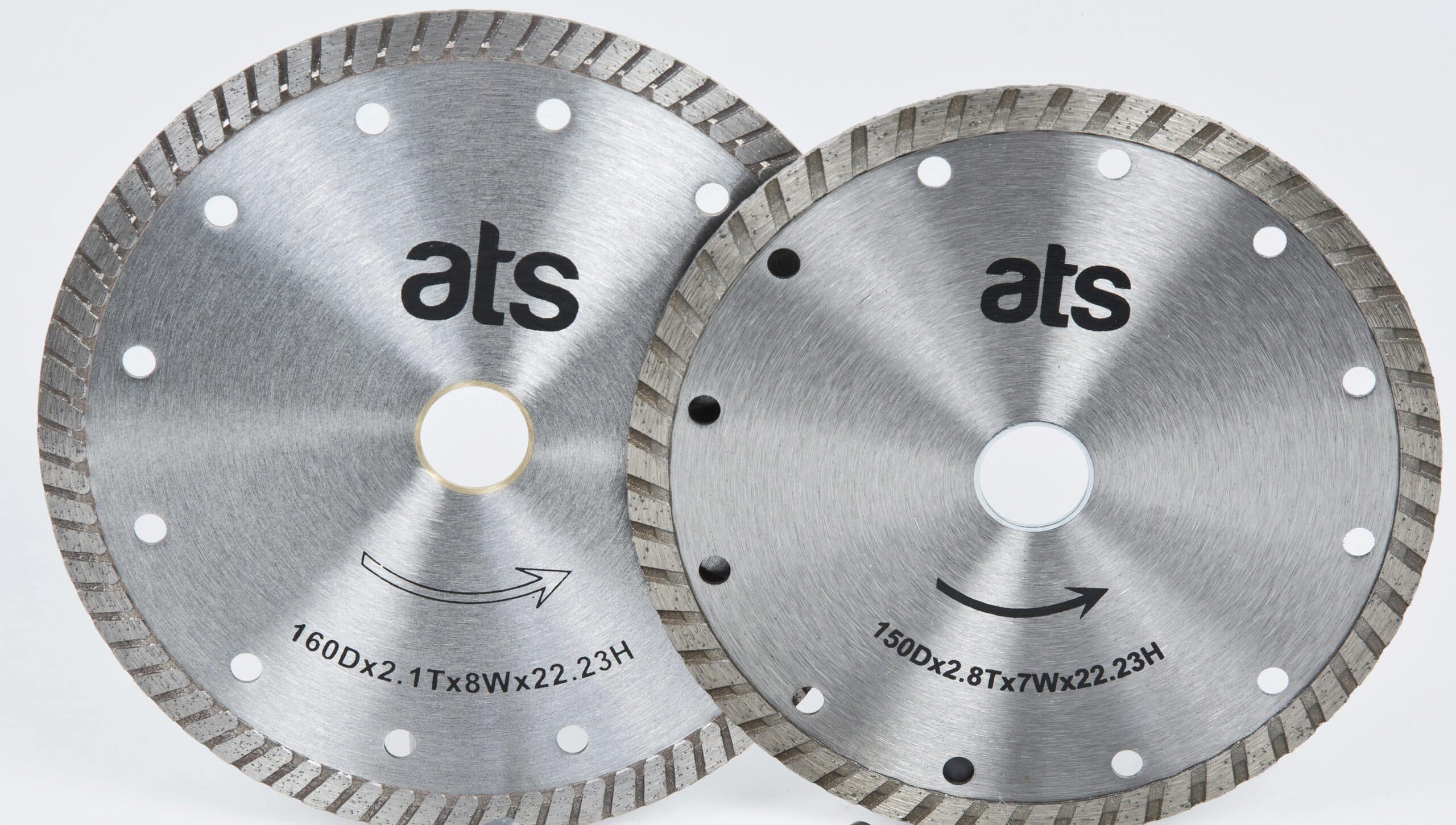
Diamond Blades to fit 165mm x 20mm Plunge Saws
Diamond blades sized to fit popular 160 and 165mm plunge, rail and circular saws, including the Festool TS55, Makita SP6000 and Dewalt DWS520 and DCS520. Five specifications to match your material.
From: £14.22 +VAT
Description
These blades re-purpose carpentry plunge and rail saws for cutting stone, porcelain and quartz. Each specification is matched to a different material, so you can pick the right cut for the job.
- Economy Turbo (150mm): a clean finish on softer stone such as limestone, softer slate, marble and softer granites
- Pro Quartz Turbo (160mm): long life in 20mm and 30mm quartz worktops and quartz tiles
- Laser Welded Segmented (150mm): fast and aggressive in hard, abrasive granite, sandstone and concrete
- Porcelain Turbo (150mm): the blade for porcelain up to 20mm thick
- Vacuum Brazed (150mm): cuts granite, quartz, porcelain, sandstone and fibreglass, and handles materials prone to breakout
Fitment: 150mm and 160mm blades with a 20mm bore. Fits the Festool TS55, Makita SP6000, Dewalt DWS520 and DCS520, plus any saw taking a 160mm or 165mm blade with a 20mm bore. Run at full speed, around 6000rpm.
To ensure your blade is always running at its best click here
Quartz cutting blade
Granite cutting blade
Porcelain cutting blade
Stone cutting blade
Sandstone cutting blade
Additional information
| Weight | N/A |
|---|---|
| Dimensions | N/A |
| Plunge Saw blades |
150mm x 20mm Vacuum Brazed Blade, 150mm x 20mm Economy Turbo Blade, 160mm x 20mm Pro Quartz Blade, 150mm x 20mm Laser Welded Segemented Blade, 150mm x 20mm Porcelain Turbo Blade |
 Your Basket
Reviews
There are no reviews yet.
Be the first to review this product!