


What is a profiling tool, can I use it on a regular angle grinder, and which one do I need? Those are the three questions we are asked most often about M14 profiling tools, so this guide answers each in turn and adds the detail you need to choose the right profile, the right construction and the right working method for your material.
A profiling tool shapes the edge of a worktop, vanity, table or step into a decorative profile such as a bullnose or bevel. It threads directly onto an M14 spindle, and the profile shape itself is formed in the tool so that as you run it along the edge it cuts that exact shape into the stone. We offer two fundamental constructions. They work the same way but suit different materials and workloads.
Can I use a profiling tool on an angle grinder?
No. We do not recommend running these tools on a standard angle grinder, because a typical grinder spins far too fast at around 11,000 rpm. Both profiler types are designed to run on a water-fed polisher at a speed under 4,500 rpm, or on a dry variable-speed grinder set to a suitable speed. Speed determines how much control you have over the tool, and it directly affects both the lifespan of the tool and the quality of the profile you produce. Too fast and you lose control, burn the tool and tear the edge.
TruForm vacuum-brazed profiling tools
These are the silver coloured tools most people will have seen before. They have an M14 thread, a washer on top and a bearing or washer in the middle or bottom depending on the profile chosen. In between the washers or bearings is the profile shape, formed in steel with diamond vacuum brazed onto the surface. The diamond is a relatively coarse grit, which makes them quick and free-cutting on softer materials.
They are designed for marble and other soft to medium sedimentary and metamorphic stones, along with man-made quartz, limestone and travertine. On marble, used wet, you can expect a vacuum-brazed profiler to produce in the region of 100 linear metres, and roughly 30 percent less than that when used dry. The two most common shapes are the TruForm half bullnose and the TruForm full bullnose.
These profiles can be used on denser products such as granite, basalt or porcelain, but the useful lifespan reduces substantially the denser the material. On hard 20mm porcelain, used dry, a vacuum-brazed tool could last as little as 5 linear metres. For occasional work on dense material that may be acceptable; for regular work on it, you want the sintered tool instead.
Sintered diamond profiling tools
This is the heavier-duty option. The cutting head is a sintered matrix of diamond, much like the cutting edge of a diamond blade, so the diamond runs through the body of the tool rather than sitting on the surface. That makes it more aggressive, longer lasting and far better suited to dense and abrasive materials. It also cuts noticeably quicker than the vacuum-brazed version.
For sandstone, concrete and 20mm porcelain, a sintered tool is what you need. It is also the right choice if you are a heavy user working softer products like marble, limestone or softer sandstones in volume. The available shapes include the half bullnose sintered profiler and the full bullnose sintered profiler.
Use both tools together for the best result
For heavy or production work, the most economical method is to run the two constructions in sequence. Use the sintered tool first to do the hard, fast cutting and rough out the profile, then swap to the vacuum-brazed tool for the final shaping before easing and polishing. Doing it this way spreads the wear, takes the heavy work off the brazed tool and, over time, gives a lower cost per linear metre on both tools while leaving a finer surface ready to polish.
Half bullnose, full bullnose and sizing
The most common shapes are “B”, which is a half bullnose, and “V”, which is a full bullnose. The number after the letter is the size of the tool in millimetres. So a B5 is a half bullnose tool with a 5mm depth of cut, and a B10 is a half bullnose tool with a 10mm depth of cut. The half bullnose rounds the top edge only; the full bullnose rounds the whole edge into a half-circle.
The V (full bullnose) profiles are very sensitive to material thickness. They can only be used on well-calibrated material of the matching size. A V20 profiler is made to cut a full bullnose on 20mm material, but the moment the material goes oversized to 21mm or 22mm or more, it is very likely to destroy the tool. For this reason many people buy the half bullnose tool instead and cut the top and bottom of the profile in two separate passes. This neatly gets around batches of problem material that vary from 18mm to 22mm in thickness.
Speed up the job: remove the bulk first
On a larger profile, especially on thicker material, it pays to remove some of the bulk before you run the profile. Cutting or grinding a bevel onto the edge first means the profiler has far less material to take away, which is quicker, easier and kinder to the tool. On dense stone, a turbo cup wheel is ideal for knocking off that bulk before profiling.
Easing and polishing the profile
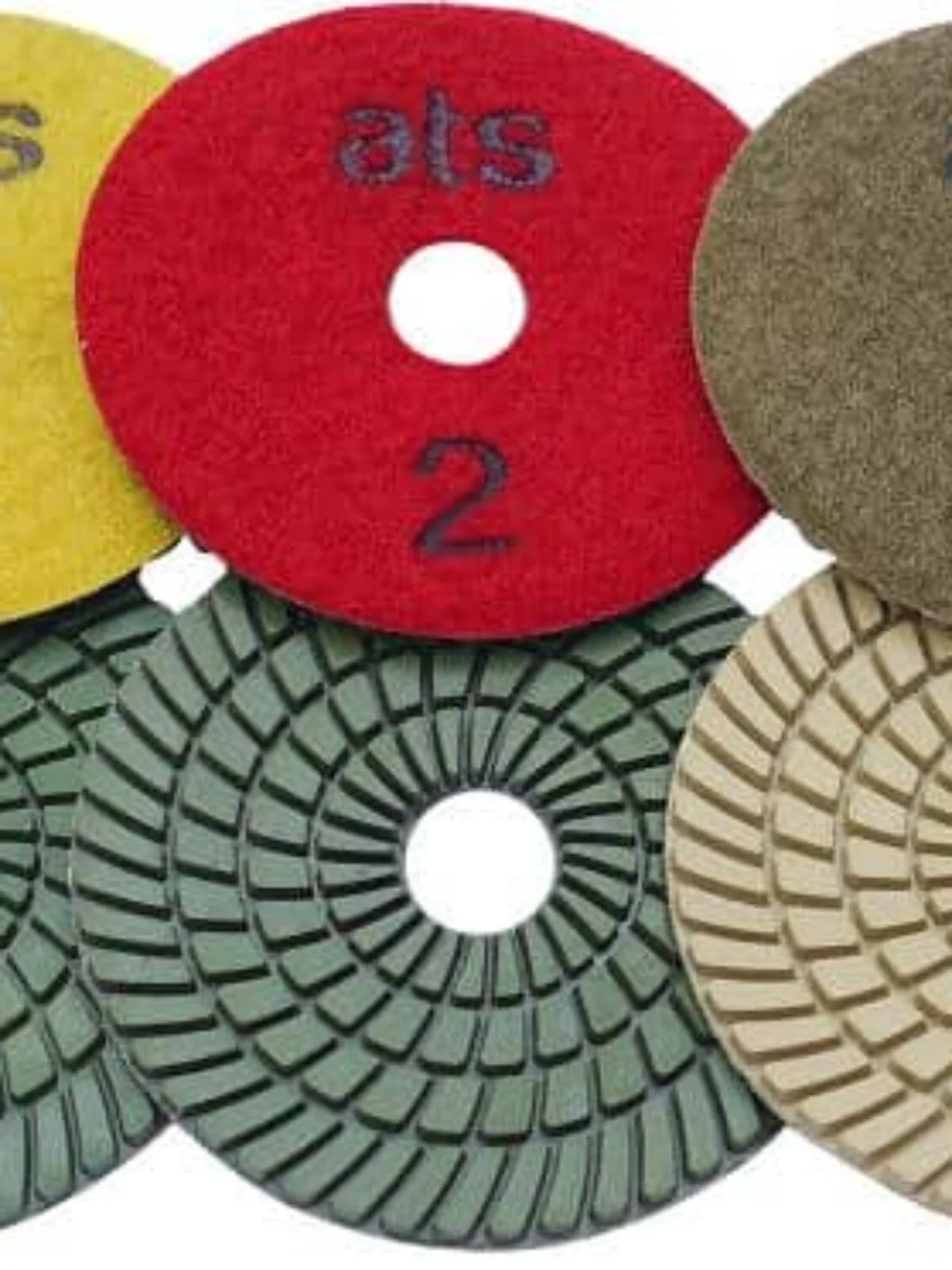
Cutting the shape is only part of the job. Once the profile is formed you need to ease the sharp arrises and polish the curve up to match the face of the worktop. Flexible diamond hand pads and shaped profiling pads are made for this, letting you follow the curve and bring it up through the grits to a matching finish.
Other profile shapes
Beyond the bullnose shapes, we stock a range of decorative profiles, mostly in vacuum-brazed form as they tend to be used on marble and softer granites:
- E, Bevel, a simple chamfered edge.
- F, Ogee, the classic S-shaped moulding.
- H, Dupont, a stepped angular profile.
- L, Cove, a concave scooped edge.
You can see the full set of shapes and both constructions in the profiling tools category.
Common profiling mistakes
- Running the tool on an angle grinder. Too fast, no control, burnt tool and a torn edge.
- Using a V profiler on oversized material. A V20 on 22mm stock will wreck the tool.
- Skipping the bulk removal. Asking the profiler to hog out a big profile in one go is slow and wears it out.
- Using a vacuum-brazed tool for heavy work on dense stone. You will burn through metres of tool; use sintered instead.
- Working dry without need. Wet running gives longer tool life and a cleaner edge wherever water is practical.
FAQ
Can I use an M14 profiling tool on a normal angle grinder?
No. A standard angle grinder runs at around 11,000 rpm, which is far too fast for profiling. These tools are designed to run on a water-fed polisher under 4,500 rpm, or on a dry variable-speed grinder set to a suitable speed. Running them too fast loses control, burns the tool and tears the edge of the stone.
What is the difference between a half bullnose and a full bullnose profiler?
A half bullnose (the “B” shape) rounds over the top edge only, while a full bullnose (the “V” shape) rounds the entire edge into a half-circle. The number after the letter is the depth of cut in millimetres, so a B10 is a half bullnose with a 10mm depth and a V20 is a full bullnose for 20mm material.
Should I choose a vacuum-brazed or a sintered profiling tool?
Choose vacuum-brazed for softer materials such as marble, limestone, travertine and quartz, where it cuts quickly and gives a clean finish. Choose sintered for dense and abrasive materials such as sandstone, concrete and 20mm porcelain, and for heavy production work, because it cuts faster and lasts far longer on hard material.
Why did my full bullnose (V) tool wear out so quickly?
V profilers are very sensitive to material thickness. A V20 is made for 20mm material, and if the stock is oversized to 21mm or 22mm the tool is forced to cut where it was not designed to, which can destroy it. For material that varies in thickness, use a half bullnose tool and cut the top and bottom of the profile in two separate passes.
How many linear metres will a profiling tool last?
It depends heavily on the material and whether you run wet or dry. As a guide, a vacuum-brazed tool used wet on marble can produce in the region of 100 linear metres, around 30 percent less when used dry. On hard 20mm porcelain that same tool could last as little as 5 metres, which is why a sintered tool is the right choice for dense material.
How do I get a polished finish on the profile after shaping?
Once the profile is cut, ease the sharp edges and polish the curve up through the grits using flexible diamond hand pads or shaped profiling pads that follow the curve. On heavy or dense work, run the sintered tool first, then the vacuum-brazed tool for the final shape, before easing and polishing to match the worktop face.


 Your Basket