



To drill a clean hole in porcelain, tile or glass, use a diamond core drill rated for the material, start the hole at an angle so it does not skate, keep the bit cool with water, run at a moderate speed, and ease off the pressure as you break through the back. Rushing the start or letting the bit overheat is what cracks tiles and chips the exit hole.
Why tile, porcelain and glass need diamond core drills
These materials are hard and brittle. A normal twist or masonry bit cannot touch hardened porcelain or glass and will crack it. A diamond core drill grinds its way through rather than cutting, which leaves a clean round hole, and because the core is hollow you only remove a thin ring of material instead of the whole hole. That means less heat and far less chance of cracking the tile.
Wet or dry drilling?
Wet drilling is cleaner and cooler, and it is the best choice for glass, dense porcelain and larger holes. You keep water in or feed it to the hole as you drill. Dry drilling is convenient for fixing holes on site, but only with bits rated for dry use, drilled in short pecks with a pause to let the bit cool. Either way, heat is what kills both the bit and the tile, so cooling is the priority.
Choosing the right diamond core drill
For glass and very hard porcelain
Thin-wall sintered bits cut these cleanly with minimum pressure, which is what brittle glass needs. The Thin Wall Glass & Hard Porcelain Drill Bits are made for exactly this, glass and very hard porcelain, where a thicker bit would crack the surface.
For everyday porcelain and tile
For routine tap and waste holes, a dry porcelain bit with a quick fitting is the easy option. The Dry Porcelain Diamond Drill Bits with Easy Coupling fit a standard drill, and the wax-filled vacuum brazed version carries lubricant inside the bit to keep it cool as it drills.
For larger holes
For bigger diameters in tile and stone up to grade 5 hardness, an electroplated holesaw is the tool. The Electroplated Diamond Holesaw Drills bore clean tap, waste and fixing holes through porcelain, ceramic, glass, marble and slate on site. You can compare sizes and fittings across the full diamond drilling range.
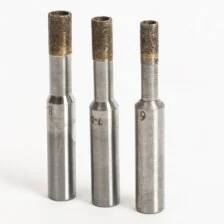
Which drill should you use?
Use a standard rotary drill or a cordless combi drill with the hammer action switched off. Hammer action will shatter tile and porcelain, so it must be off for diamond core drilling. A variable-speed trigger helps, because you want a moderate, controlled speed rather than full revs, especially when starting the hole and breaking through the back. For wet drilling, a drill rated for damp use or a dedicated wet core drill with a water feed is safest. Keep a firm two-handed grip so the bit cannot snatch and crack the tile if it binds.
Step by step: a clean hole every time
1. Mark and start the hole
Mark the centre of the hole. To stop the bit skating on a glazed surface, start at roughly 45 degrees to score a small ring, then bring the drill upright once you have a groove to sit in. A strip of masking tape over the spot, or a drill guide jig, helps the bit bite.
2. Speed and angle
Run at a moderate speed, not flat out. Too fast overheats the bit and glazes it. Keep the drill square to the surface so the hole stays round and the bit does not bind in the cut.
3. Keep it cool
Cooling is the single most important thing. Drill into a small dam of water, dip the bit regularly, or use a wet feed. Heat blues the bit and cracks the tile, so never let it run dry for more than a few seconds unless the bit is rated for it.
4. Break through gently
As you near the back of the tile, ease right off the pressure. Most chipping and blowout happens on the exit. Letting the bit grind through under light pressure leaves a clean back edge. Where you can reach both sides, drilling halfway from the face and finishing from the back avoids exit chipping entirely.
Avoiding cracks and chips
A few habits prevent most breakages. Support the tile fully, especially a loose one. Do not drill too close to an edge or a grout line. Keep the bit cool and do not force it. And ease off at breakthrough, where the most cracks start.
Drilling a tile already on the wall
Drilling a fitted tile needs a little more care because you cannot reach the back. Avoid drilling through a grout line, where the tile is weakest and the bit is most likely to skate. Keep the bit cool with a sponge or a putty dam of water held against the wall, and ease off as you feel the bit reach the substrate behind so you do not crack the tile. Mark your fixing centres carefully first, as a cracked fitted tile is far harder to put right than a spoiled offcut.
Controlling dust
Dry-drilling porcelain raises fine silica dust, so capture it at source where you can. The DrillDuster 82 2.0 extractor shroud captures dust right at the hole for bits up to 82mm and connects to a vacuum. Wet drilling keeps dust down to a slurry instead, which is another reason to drill wet whenever you can.
FAQ
What drill bit do I need for porcelain tiles?
A diamond core drill rated for porcelain. For everyday tap and waste holes a dry porcelain bit with an easy-coupling fitting works in a standard drill, while glass and very hard porcelain need a thin-wall sintered bit that cuts with less pressure.
How do I stop the drill bit skating on tile?
Start the hole at around 45 degrees to score a small ring, then bring the drill upright once it has bitten. Masking tape over the spot or a drill guide jig also stops the tip wandering on a glazed surface.
Should I drill tile wet or dry?
Wet is cleaner, cooler and best for glass, dense porcelain and larger holes. Dry is fine for quick fixing holes with a bit rated for dry use, drilled in short pecks with pauses to cool. Either way, heat is what cracks the tile.
Why does my tile crack when I drill it?
Usually heat, too much pressure, or drilling too close to an edge. Keep the bit cool with water, let it grind rather than forcing it, support the tile, and ease off as you break through the back where most cracks start.
Can I drill glass with the same bit as porcelain?
Glass needs a fine, thin-wall diamond bit and a gentle touch with plenty of water. A bit rated for glass and very hard porcelain covers both, but a coarse masonry-style core drill will chip or crack glass.
How do I get a clean hole on the back of the tile?
Ease off the pressure as you approach the back, since blowout happens on the exit. Better still, drill halfway from the face, then finish from the back, so both surfaces are cut cleanly and neither side chips.


 Your Basket